Showing posts with label CW. Show all posts

Monday, May 3, 2021

How Low Can You Go...

The past four years have brought many changes to the dynamic of our family which precluded my spending so much time as an Amateur CW operator.  So, the gear got packed away into dust catching boxes in closets.  They have been relocated, pushed around, and survived a move to the edge of the world; a remote corner of southeast Kansas. Happily these years have been a good time for our family; a time to get closer and live out the last remnants of our children's young lives before adulthood swallows them up forever.  The sacrifice of other things during this time was more than worth it.  However, each time I have come across the boxes guarding my gear I have felt that sting; that sense and pang that lives in the lightning of a radio operators heart.  An electromagnetic desire to get out my radio and listen up for that relic tune morse which is still alive and well on the continuous wave pouring like a gated explosion of water into the either; a flood of cacophony from the many sky hooks scattered abroad.  Recently I got into my paper records from the time I spent operating CW.  A rush of experiences that I will forever relish came washing over me and renewed my interest in the pantheon of radio operating skill; A1A.

I suppose I could carry on about my box of contact cards but that would never do.  For me it is not the contacts that are the real prize of QRP and CW.  It was the odd rarely related experiences that happened along the way.  There was the day I first operated directly under the sun with no shade.  While I was working a contact, my telegraph speed key suddenly started sending an endless string of dashes on it's own.  The very close contact gap and the expansion of the brass & steel spring in the heat of the direct sunlight caused my key to develop a perfectly balanced recursive bounce.  It was as embarrassing as it was irritating.  I quickly attempted to end the contact in a clumsy disjointed manner the best I could.  There were the endless antenna forms I came up with inside our apartment attached to the walls, the ceiling, and in countless other ways.  Some of these antennas made astonishing contacts.  There was the time i had all my gear on my back and had a terrible bike crash on the way to the park.  Getting eaten by mosquitoes, dogs running through my antenna support lines, trying to explain to astonished passers by what morse code is.  There's more.  I once set up in a parking lot by a small tree which I used to support my antenna to work a QRP sprint.  Before I could get my gear taken down, I got blocked in by a sudden rush of young college students arriving to attend a nearby party or get together.  There were storms and rain.  There were days when the bands where absolutely silent; devoid of radio life.  Days of sunburn or even blue frozen fingers.  You name it, I probably experienced it.  All of it served to give me one of the greatest times with radio I have ever had.  Moreover, every claim about CW and QRP, was for me, validated completely.  There is one experience however that absolutely set the realities of QRP and CW into my mind like concrete.

My late friend Bart Lawson, a fantastic teacher, avid CW and QRP operator would have a brief QSO with me every morning.  Those sessions were great and what a privilege.  Bart was also an accomplished fox hunter which is no small skill for any operator.  We would try to use different bands, power levels, and other QRP related tactics.  Bart and I were both followers of a facet of QRP where operators try to make contacts with extremely low power; like stupid low.  He taught me a lot and was the reason I earned several 1K miles per watt awards.  How low can you go and how far can you get is the trick and the skill to learn.  One morning I will never forget, Bart and I finished up a brief rag chew on 15 meters and then signed off.  I had been using a folded vertical T antenna I made and which I had packed inside the closet of our half in ground apartment.  Why?  I am not sure.  I love antenna work.  It is a geek thing.  After our QSO I was messing around trying to refold the upper T section when I distinctly heard a very clear carrier on my tuned frequency.  Not super strong but quite clear.  A few dots, and a long dash and then pow, I heard W0IIT.  What?  Bart?  If I remember I may have tried to answer back but got no response so I called him on the telephone.  Surprised at the revelation that he had been heard, he chuckled and stammered out the statement that he had been checking his QRP transmitter into a dummy load.   This may seem trite to some ops but the situation was that he lived several miles from my home, was inside his house, and I was on a folded antenna inside a basement apartment.  For me it was a pretty cool experience and a big time validation of QRP and CW both.  Amazing....

I still believe the most fun in HAM radio lives in morse code and CW but thats just me.  What ever mode and band you choose to use and what ever equipment you operate on, make sure you operate in the true spirit of radio and relish every second you live on the air.  Live and learn and light up the either with intelligence...

Amen, 73's D Keath NØWKZ

Half wave tuner that actually worked perfect through all the bands from 80M to 10M


One of my radio bags with bird poop!


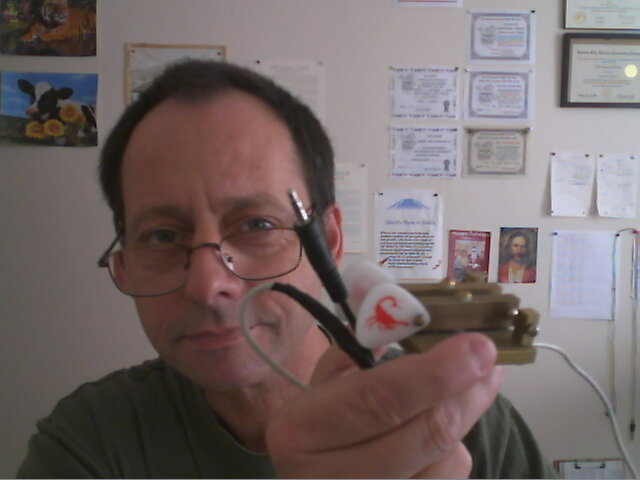
Little speed key I built from a kit


Friday, May 8, 2020

KM6FPP Tours the KPH Morse Code Station

Here is an interesting video about the KPH Morse Code Station. Have any of you seen this in person?


Friday, July 27, 2018

Zero Beat - The Doctor Is In

"Zero Beating" is the topic of the current (July 19) episode of the "ARRL The Doctor is In" podcast. Listen...and learn!

Sunday, October 16, 2016

Mosquito Food

By SEKARC Contributor David Keith NØWKZ

Recently while conducting the fine business of a special event CW radio station, the realities of fishing came crashing back into my existence from memories long hidden file. Fishing? Yes!

During this event, a number of the other operators involved communicated back and forth for a time using a group email address. This was sort of neat as it raised my own awareness of the other operators and their struggles and successes. One of them related a tale of woe that I know only all too well; the woes of apartment dwelling operators. By my own estimation, my Morse Code/CW career is only about three years long. In that time, I have fought tooth and nail against the ear splitting forces of electromagnetic despair that apartment dwelling operators have to endure. A plasma one floor below is turned on and suddenly a guy across the pond disappears from my headset. Water heaters, washing machines, throngs of unshielded wall warts dancing on the edge of hash, and even AC units from the building next door. Chargers, flat screens, power supplies; the list of sources is endless. All of it; a symphony of spectrum wash dancing wildly across the S Meter. To be sure, many of my operations are with my friend and Elmer W0IIT just a few doors down, and sending from the pages of a random book through my code practice oscillator into a recorder, and copy practice from the WebSDR or W1AW. Countless days have passed where my main operating has been with myself. I have often sat dreaming with envy of those ops with towers and clear viewed signal paths before them. I myself have to get out.

Sunday, September 25, 2016

Museum Field Day - SEKARC and CCHM

The SEKARC held it's September meeting in the field on the grounds of the Crawford County Historical Museum. It was a great success! There were many places to setup our gear and the host was very interested and helpful! Thanks again to the Museum for welcoming us and from the great day we had there, no doubt that we will be back again!

Jack WDØCFH made a contact on QRP CW. Conditions on the bands were not too great and there was an RTTY contest going on that covered up most of the popular low power digital frequencies. You would think they would stay away from known operating mode frequencies. But it was still fun, Jeff KAØEGE was running WSPR and is logged as hearing several stations from all over the United States, Canada, Germany and England and his transmission was even heard by a station in Iceland.


Friday, April 15, 2016

SEKARC SS CW NET LIVES


The SEKARC SS (slow speed) NET is planning to restart again on Wednesday April 27 at 8:30 pm after the 2 meter net and on the second and forth Wednesday of each month there after.  Depending on how this works out for everyone it may be adjusted later.  The purpose of the net is practice for CW operators and to make us proficient if we ever have to use net controlled traffic.

It is a SLOW SPEED net and is designed for the new CW operator and those of us who need the practice or are just learning.  Please try and keep your speed below 8 wpm.  Our operating frequency will be between 7.057 and 7.058 MHz .  I will try to use 7.057.5 but if it is busy QSY up or down between the above.  Let's have a good time and use the equipment that works for you.

                                                     CHECKING IN

Step 1:  Net Control (NC) calls "QRL? QRL?" to see if the frequency is in use.  This is a good time to zero beat NCS's signal.

Step 2:  Net Control calls "CQ CQ CQ SEKARC SS CW NET DE WD0CFH WD0CFH NC QNI K".  That means it's time for stations to send their call signs to Net Control to copy.  Our net is a slow speed net so please keep your speed under 8 words a minute.

Step 3:  "LISTEN" for other stations first.  When you don't hear anyone trying to check in, then send "DE <space> YOUR CALLSIGN".  The space is important so that you can listen and make sure that you are not "doubling" with someone.  If NCS misses your call he will ask "AGN ?" and you should resend your call.

Step 4:  At the end of initial check in NC will acknowledge by repeating all calls.  Example: "R R  W0MQY ES KD0RTX ES N0WKZ AS".  "AS" means standby, I will return later for your comments.  NCS will again again call "QNI K" to pick up remaining stations who did not check in earlier.

Step 5:  Wait for NC to call you again.  Example: "W0MQY DE K0SEK KN".  KN means NC is calling you and only you to make some comments.  You can say "73" if you wish and end with "K0SEK DE W0MQY KN" if you have no comments.

Step 6:  NC will call "QNI K" after a few comments to see if other stations wish to check in.  If you have not yet been acknowledged by Net Control, keep trying until I hear you.
Remember:  DE <space> "YOURCALLSIGN".
NC will call the entire list until everyone has had a chance to comment, giving more opportunities to QNI in between.  Please be patient.  If NC doesn't copy your call I will ask "AGN ?".  You can then send your call again.

Step 7:  NC will close the net after the last comment with "73 SEKARC SS CW NET IS NOW CLOSED DE WD0CFH NC SK"

That's it guys.  This will be a whole new experience for me as NC and probably for a few more who have never checked into a net.  We are a "slow speed" net so don't hesitate to ask "QRS" (slow down) if you are having trouble copying.  No one is going to make more mistakes than ME.

Jack ... WD0CFH

SEKARC SS CW NET LIVES


The SEKARC SS (slow speed) NET is planning to restart again on Wednesday April 27 at 8:30 pm after the 2 meter net and on the second and forth Wednesday of each month there after.  Depending on how this works out for everyone it may be adjusted later.  The purpose of the net is practice for CW operators and to make us proficient if we ever have to use net controlled traffic.

It is a SLOW SPEED net and is designed for the new CW operator and those of us who need the practice or are just learning.  Please try and keep your speed below 8 wpm.  Our operating frequency will be between 7.057 and 7.058 MHz .  I will try to use 7.057.5 but if it is busy QSY up or down between the above.  Let's have a good time and use the equipment that works for you.

                                                     CHECKING IN

Step 1:  Net Control (NC) calls "QRL? QRL?" to see if the frequency is in use.  This is a good time to zero beat NCS's signal.

Step 2:  Net Control calls "CQ CQ CQ SEKARC SS CW NET DE WD0CFH WD0CFH NC QNI K".  That means it's time for stations to send their call signs to Net Control to copy.  Our net is a slow speed net so please keep your speed under 8 words a minute.

Step 3:  "LISTEN" for other stations first.  When you don't hear anyone trying to check in, then send "DE <space> YOUR CALLSIGN".  The space is important so that you can listen and make sure that you are not "doubling" with someone.  If NCS misses your call he will ask "AGN ?" and you should resend your call.

Step 4:  At the end of initial check in NC will acknowledge by repeating all calls.  Example: "R R  W0MQY ES KD0RTX ES N0WKZ AS".  "AS" means standby, I will return later for your comments.  NCS will again again call "QNI K" to pick up remaining stations who did not check in earlier.

Step 5:  Wait for NC to call you again.  Example: "W0MQY DE K0SEK KN".  KN means NC is calling you and only you to make some comments.  You can say "73" if you wish and end with "K0SEK DE W0MQY KN" if you have no comments.

Step 6:  NC will call "QNI K" after a few comments to see if other stations wish to check in.  If you have not yet been acknowledged by Net Control, keep trying until I hear you.
Remember:  DE <space> "YOURCALLSIGN".
NC will call the entire list until everyone has had a chance to comment, giving more opportunities to QNI in between.  Please be patient.  If NC doesn't copy your call I will ask "AGN ?".  You can then send your call again.

Step 7:  NC will close the net after the last comment with "73 SEKARC SS CW NET IS NOW CLOSED DE WD0CFH NC SK"

That's it guys.  This will be a whole new experience for me as NC and probably for a few more who have never checked into a net.  We are a "slow speed" net so don't hesitate to ask "QRS" (slow down) if you are having trouble copying.  No one is going to make more mistakes than ME.

Jack ... WD0CFH

SEKARC SS CW NET LIVES


The SEKARC SS (slow speed) NET is planning to restart again on Wednesday April 27 at 8:30 pm after the 2 meter net and on the second and forth Wednesday of each month there after.  Depending on how this works out for everyone it may be adjusted later.  The purpose of the net is practice for CW operators and to make us proficient if we ever have to use net controlled traffic.

It is a SLOW SPEED net and is designed for the new CW operator and those of us who need the practice or are just learning.  Please try and keep your speed below 8 wpm.  Our operating frequency will be between 7.057 and 7.058 MHz .  I will try to use 7.057.5 but if it is busy QSY up or down between the above.  Let's have a good time and use the equipment that works for you.

                                                     CHECKING IN

Step 1:  Net Control (NC) calls "QRL? QRL?" to see if the frequency is in use.  This is a good time to zero beat NCS's signal.

Step 2:  Net Control calls "CQ CQ CQ SEKARC SS CW NET DE WD0CFH WD0CFH NC QNI K".  That means it's time for stations to send their call signs to Net Control to copy.  Our net is a slow speed net so please keep your speed under 8 words a minute.

Step 3:  "LISTEN" for other stations first.  When you don't hear anyone trying to check in, then send "DE <space> YOUR CALLSIGN".  The space is important so that you can listen and make sure that you are not "doubling" with someone.  If NCS misses your call he will ask "AGN ?" and you should resend your call.

Step 4:  At the end of initial check in NC will acknowledge by repeating all calls.  Example: "R R  W0MQY ES KD0RTX ES N0WKZ AS".  "AS" means standby, I will return later for your comments.  NCS will again again call "QNI K" to pick up remaining stations who did not check in earlier.

Step 5:  Wait for NC to call you again.  Example: "W0MQY DE K0SEK KN".  KN means NC is calling you and only you to make some comments.  You can say "73" if you wish and end with "K0SEK DE W0MQY KN" if you have no comments.

Step 6:  NC will call "QNI K" after a few comments to see if other stations wish to check in.  If you have not yet been acknowledged by Net Control, keep trying until I hear you.
Remember:  DE <space> "YOURCALLSIGN".
NC will call the entire list until everyone has had a chance to comment, giving more opportunities to QNI in between.  Please be patient.  If NC doesn't copy your call I will ask "AGN ?".  You can then send your call again.

Step 7:  NC will close the net after the last comment with "73 SEKARC SS CW NET IS NOW CLOSED DE WD0CFH NC SK"

That's it guys.  This will be a whole new experience for me as NC and probably for a few more who have never checked into a net.  We are a "slow speed" net so don't hesitate to ask "QRS" (slow down) if you are having trouble copying.  No one is going to make more mistakes than ME.

Jack ... WD0CFH

Wednesday, April 29, 2015

CW Roundtable and PSK Net Changes

The weekly Sunday CW roundtable has been working out great for those sending code! We decided to make a couple of changes to it and to the PSK31 net.

Beginning with the 2nd Wednesday in May the CW Roundtable will be twice a month and will begin at 8:30 on the 2nd and 4th Wednesday! The frequency may be adjusted a little after we see how the noise levels are at 8:30 and if needed, we will notify the group of the frequency changes. Also, the PSK31 net will now be held twice a month and will begin at 8:30 after the 1st and 3rd Wednesday FM net. 

Monday, April 13, 2015

Job or Adventure?

By
David Keath

As always, I am going to taste, swish around in my mouth, and savor each and every experience in Radio that I am lucky enough to get. Like cheese tasting or biting into one of those awesome gourmet burgers you get at some place like Applebees or Fridays; those frightening experiences in life are ones to be relished for their power to shake your nerves and heart both.

I have been practicing CW, or rather Morse Code, for a long while now and yet I am still shakin in my boots when I attempt to make contacts. The funny part is that I work almost daily with my Elmer WØIIT like a seasoned pro, and recently I have been able to check into a local and regional CW net. Outside of that, you might say I've got a mean set of the jitters. Key fright.. Ouch! But hey, maybe there are one or two others out there who will say to themselves, “Wow, I am not the only one...”

Monday, January 26, 2015

CW Practice Night Jan 25 2015

SEKARC on Soundcloud

We had 3 Hams at the RT tonight.  There was some noise on the freq that we were using but we all had a good time with the dots and dashes.  There was Loren KDØRTX,  Joe WØMQY and Jack WDØCFH.  We were on the air for about 45 min exchanging a verity of information.  We invite everyone to our next RT next Sunday and if you just want to listen that's good practice too.
Thanks to those who joined in ..... 73 everyone.

Jack ... WD0CFH

If you are wondering why the KDØRTX signal is so loud it's because the antenna she was sending on is only a few feet from the receiving antenna that I recorded this on! Great job everyone and everyone that wants to is welcome to join!

.

Tuesday, January 20, 2015

SEKARC CW Night !!


If you missed the first CW Night for SEKARC, then be sure and listen next week. And even better, feel free to jump in! I used Ham Radio Deluxe to decode some of it. Machine decoding of a human generated CW signal is not good at all. I did catch some of it. If you would like to see what I captured go to the YouTube page for the video and check the info section.

Monday, November 10, 2014

Russian Digital Radio Club Contest

Click Image For More Info

Dear Fellow Radio Amateurs,

The Russian Digital Radio Club has the honour to invite the radio amateurs all over the world to participate in the 1st Russian WW MultiMode Contest 2014. The objective of the contest is to establish as many contacts as possible between radio amateurs around the world and radio amateurs in Russia.

We invite all fans of all modes to take part in contest from 12.00 UTC on Saturday 15th November till 11:59 UTC on Sunday 16th November, 2014. Types of modulation: BPSK63, CW, RTTY, SSB. The repeated contacts are permitted on different bands and different modes providing that a contact will be made not earlier than in 3 minutes. The output power should not exceed 10 watts on 160 meters and 100 watts on other bands. The operator may change the bands no more than 10 times within calendar hour (with zero on 59-th minute of each hour). Only one transmitted signal is permitted at any time. Bands: 160 m, 80 m, 40 m, 20 m, 15 m, 10 m.

Prizes and certificates in all categories:
SOAB - BPSK63-CW-RTTY-SSB
SOAB - BPSK63-CW-RTTY
SOAB - BPSK63-CW-SSB
SOAB - BPSK63-RTTY-SSB
SOAB - CW-RTTY-SSB
SOAB - BPSK63-CW
SOAB - BPSK63-RTTY
SOAB - BPSK63-SSB
SOAB - BPSK63-SSB
SOAB - RTTY-SSB
SOAB - CW-RTTY
SOAB - CW-SSB
MOAB - BPSK63-CW-RTTY-SSB

For more info please visit Russian WW MultiMode Contest 2014 Rules: http://www.rdrclub.ru/russian-ww-multimode-contest/159-rus-ww-multimode-contest

You should send your log upload via the Web interface http://ua9qcq.com/en/submit_log.php?lang=en

All logs must be sent no later than 14 days after the contest (23:59 UTC on 30th November 2014).

73! de Russian Digital Radio Club

Regards,
Yuri | rk3dsw@rambler.ru

Wednesday, November 5, 2014

Loaded Whips and Portable Trips

By David Keath – N0WKZ

Because of my very restricted location, I recently purchased the one of the few antenna's I have ever paid money for.  It is a coil loaded MFJ 1840T telescopic whip for 40 meters.  Granted, I knew it would be a compromise but it turned out to be quite a nice little device.  I have no complaints as it does exactly what it should for what it is.  Nevertheless, time and time again, I continue to find that there is only one true remedy for a bad location.  Portable Trips.  Despite the colder autumn temperatures, I decided to pack up and head out in order to try and get in at least one more trip before mother nature starts pooping all manner of nasty stuff upon us.  As well, I usually get at least one contact out of a trip which is often far more than I get at home.

Saturday, July 5, 2014

Field Day Results, Sights and Sounds

Field Day 2014 is in the books and behind us. I think that overall it was a success! Certainly an improvement on last year and our thanks go to the Hams that contributed! If I missed anyone below please let me know and I will get them added to the list!

KAØEGE - Jeff    KDØRTX - Loren    WØMQY - Joe  
WDØCFH - Jack    KBØPQP - Tyler    KCØSHN - Jordan
NØIGZ - Frank    N3LRH - Leon    N2UHC - Tom  
ADØHW - Gailen    KDØCUR - Justin    KDØDET - Mike
KEØAKP - Keith

Thursday, April 17, 2014

The Mysterious Mode - CW


I can still remember vividly nearly one year ago, sitting in front of my new rig, listening intently to the mysterious strings of dit's and dah's that clutter the 40 meter band at night. At the time, I wondered how could anyone make sense of the varied tones so close together, and what was the traffic? What veiled message could be so important that it would be encoded in a seemingly endless tense of audio and tonal music. I can remember straining to catch one or two of the only characters I knew at that time; K and N. It was a blaze of mind bending speed beeping to be sure. At least it was then.

Sunday, March 9, 2014

Slow Speed CW Weekly Net

Here is information regarding a slow speed weekly CW Net held weekly. Just tune into the Kansas Slow Speed Net operated by Mike WD0ESF in Medicine Lodge.

The net meets on 3.547 MHz at 7:32 PM Kansas City time every Monday evening.  The signal is usually S9  or better in Kansas City.

It is easy to get recognized.  Just send your call when the net controller asks for check-ins.  If you are not sure when that is, just wait until you hear others sending their calls.  Then, when you hear the net controller send "pse wait"  acknowledging the previous call, he will ask for new check-ins.  Send your call then.  Even if you screw it up, he will still recognize you.

Don't worry about speed, the net will operate as slow as the slowest operator.  It is a friendly net dedicated to the encouragement of new (and old) CW operators to improve their skills. If you listen or check in to this net, let us know in the comments below!

Thanks to Jaimie Charlton  AD0AB for this information !!

73's KAØEGE

Monday, October 7, 2013

Joe's QRP Station Build

This is the first member post of many I hope. Joe wrote this piece about a recent project. If you would like to post something here about your projects, experience or thoughts, let me know and we will see if we can post it up!

Joe's QRP Station Build
by Joe Porter WØMQY

I'm a big fan of portable qrp operations and enjoy the PSK31 mode.  There are always lots of cables and boxes to carry around with you, and I decided there must be a better way.  The following photos show my solution to keeping it all together.


I removed the printer stand from my computer lab because it was too large and took up too much desk space.   I can’t claim originality for the idea but after stumbling over the stand for several months, I assembled it into a portable QRP_PSK31 unit.  Under the stand on the left is the Icom 703®, in the center is the Signal One® PSK31 interface, and on the right is the external speaker.  Handles were placed on the top of the stand for ease of carrying.  The top of the stand makes a nice resting place for the laptop.  The two heavy steel legs make it a great support for the computer but raises the keyboard above the level I like to type.  This problem was solved by using a small collapsible table that has a height adjustment.  This table is set to about 24” high bringing the laptop to a comfortable typing position.

While this particular setup would not satisfy the biker, pedestrian, or back pack mobile enthusiast, it does simplify my setup and teardown time in the local park.  This package was used the past weekend with great success during the Brutus Bash in my camping trailer.   For a quick stint in the local park, it is a keeper.


This photo gives a better view close up of the operation position.  The stand seemed to slide around on slick surfaces so a couple of heavy chair grommets were added to the bottom of the legs to provide stability.


This photo shows the arrangement of the equipment underneath the stand.  The Icom 703® is on the left, the Signal One interface® with associated cabling in the center, and the Icom 703® external speaker is on the right. Directly behind the above equipment are two 7 amp hour SLA batteries.  One battery is used for operation while the other is on the charging system.


A 15 watt solar panel provides the charging power for the second battery while the radio is operated from the first battery.  The panel is probably marginal in keeping up with the radio but it does a nice job of charging the second battery in the pack.  So far, the batteries have outlasted me on my trips to the field.  That put my fears to rest on whether I had enough battery power for a weekend or a 4 hour sprint.

The Icom 703® would not be the radio of choice if I were going for a long haul because it draws 350 ma. on receive and the transmitter will pull about 1.5 amps on transmit.  Although these two batteries with the solar charging system make it completely portable it does have limitations with its size and weight.  For me, that is offset by the quick setup and tear down time.  Coupled with some South Bend® SD20 collapsible fishing poles and a dipole for each band, it makes the ideal portable companion for me.  The beautiful part of all this is that the Icom 703 gives me CW, PKS31, SSB, RTTY, and NDB chasing.   The complete portability of this system provides many an opportunity to go to the park, woods, Brutus Bashes, or any other event I might want to operate.  It also has the neat feature of being a quick setup in time of disaster for a small command station to assist in public service.

Last but not least, it was decided to keep things as simple as possible to minimize breakdowns, broken cables, and solder joints in the field.  As is shown in the photo, all of the equipment including the batteries are equipped with Anderson Power Pole® connectors.  This makes for easy switching batteries, removing equipment for other projects, and just plain versatility.


This project has given me pleasure both assembling and using it.  I love QRP radio and portability. This package gives me both.  If you haven’t tried portable operation, I suggest you give it a try.  It is great fun and you get to enjoy the great outdoors.

72/73’s   Joe  WØMQY


Sunday, September 8, 2013

New "Old" Take on CW Code

I ran across this on an email list that I subscribe to "Larry's List". This is a very informative group and lots of different things are posted from FCC rule updates, antenna ideas, ham equipment for sale ( $500 Yaesu 857 recently ). And this little video posted below... kind of a new "old" take on learning CW.

Here is a link to the website and a place to sign up and be added to the mailing list !


Monday, August 5, 2013

Enigma Machine and Morse Code

I ran across this video yesterday and thought it was fascinating. It shows an enigma machine that the Germans used to code and decode secret messages. The code was then transmitted via Morse Code. Please watch this when you get the chance.